
Traitement de conservation de l'Arc de Triomphe du Carrousel
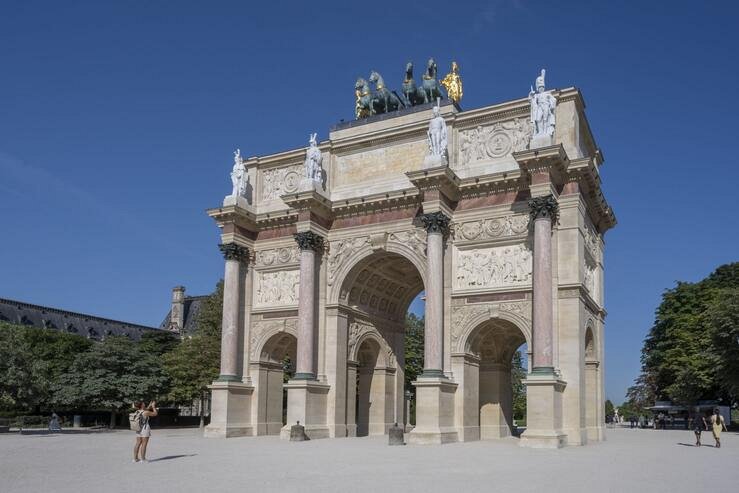 Travaux de préservation et de restauration de l'Arc de Triomphe du Carrousel
A memorial dedicated to commemorate the Grande Armée.
The Arc de Triomphe du Carrousel was built between 1806 and 1810 as a symbol of the honor Napoleon felt for his military. This structure became the grand entrance of the Tuileries palace. It has three arches, similar to the inspiration drawn from the arches in Rome of Constantine and Septimus Severus, and sculptured reliefs on the pilasters with the events of the 1805 campaigns in Germany and Austria. The director of Louvre at that time, Dominique Vivant Denon, is the creator of the decorative scheme. Each sculptor made one of the reliefs and they all worked from designs made by the painter Charles Meynier. The same applies to the eight statues of Grande Armée soldiers in the attic; they were made by different sculptors.
A fundamental preservation.
The last time a restoration campaign was carried out on this monument dates back to more than 80 years ago, and since then, there has been a lot of erosion that has affected the structural integrity of the monument as well as made it impossible to appreciate its decorative elements. The gilded lead figures representing Fame and the bronze quadriga are both visibly cracked. The marble bas-reliefs have been broken due to the rusting of their fastenings. The griotte marble plaques are threatened with detachment. The grognards are very dirty, much worn, and very defective.
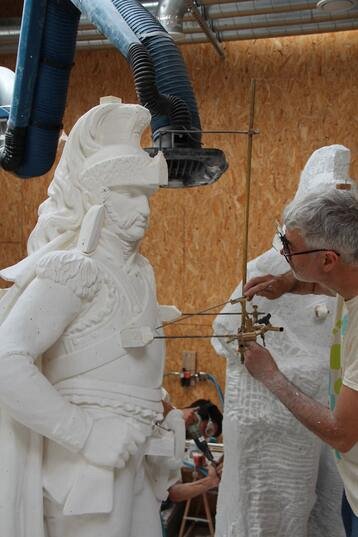
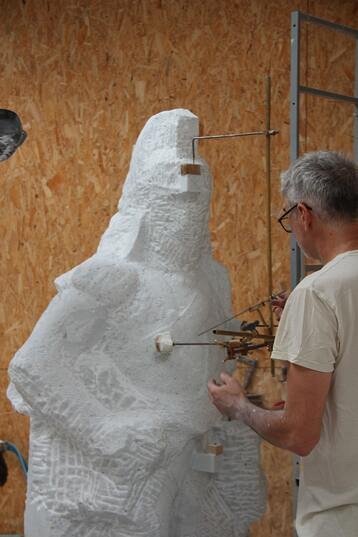
The conservation treatment will further consolidate the structure by masonry waterproofing and ironwork reinforcement. More clarity on the surfaces and ornaments, along with restoring the sculpted features, will make the reading better.
Want more info on the conservation work at the Arc de Triomphe du Carrousel? Other videos can be viewed on Louvre +.
 illustration
 illustration