
Halls, Galleries & Collections
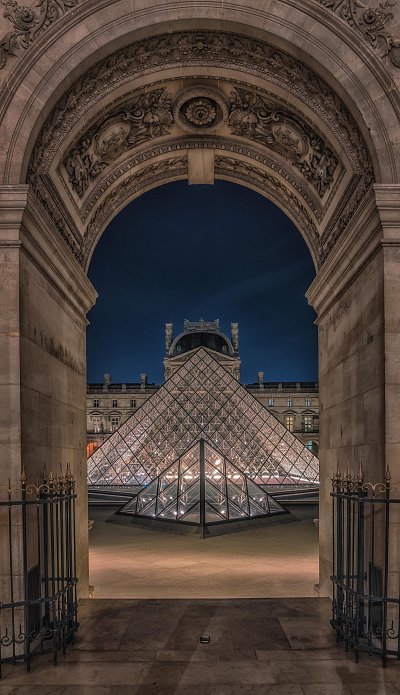
A journey of discovery through many different forms of beauty, in no way limited to being classified as art, is what is being offered by the collection at the Louvre. Even a very ordinary and simple Egyptian chair housed in the Louvre has the same status of a masterpiece along with many famous works of art from the Italian Renaissance.
What makes our museum special is how many different kinds of things are found in the collections housed at The Louvre, no matter what part of history they represent. The past is examined, questioned and discussed inside the museum, giving greater meaning and substance to the present. The Louvre is like an ongoing, changing encyclopedia. By combining all of the different types of collections in new ways, visitors have the opportunity to connect with all the objects, viewing them with different angles and contexts. Moving fluidly from one culture or art form to another can create an exhilarating feeling of being a nomad, a traveller, an explorer.
This online database for the Louvre collections provides all users access to a shared journey of both exploration and re-exploration with over 500,000 works of art located in different places in France and beyond, from both the Louvre and the Musée National Eugène-Delacroix. Each entry gives current information on where that piece of art is located i.e., whether it is displayed at the Louvre or Musée Delacroix , exhibited outdoors in the gardens, loaned to other institutions or part of a reserved collection. The database is updated daily as new information becomes available as part of the continuing documentation and research activities by the specialists who work for the Établissement Public du Musée du Louvre .
Opening hours of the Louvre's rooms and sections
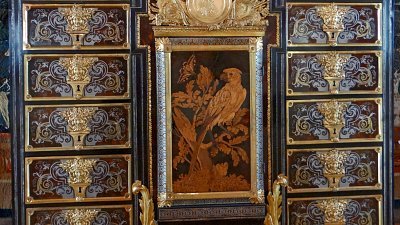
European Decorative Arts, 1700–1800
Thirty rooms of royal French furniture, Sèvres porcelain, tapestries, and court objects from the reigns of Louis XIV through Louis XVI, displayed in period rooms on the Sully Wing's first floor.
It remains possible to walk through rooms 601 to 604, but no artworks are on display.
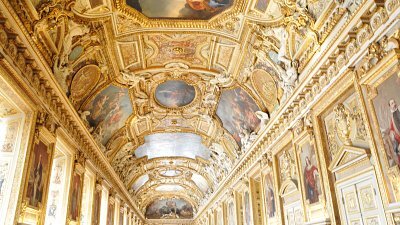
The Galerie d'Apollon
Louis XIV's gilded gallery on the Denon wing's first floor, decorated by Le Brun and completed two centuries later by Delacroix. It holds what remains of the French Crown Jewels, including the 140-carat Regent Diamond.
Currently closed.
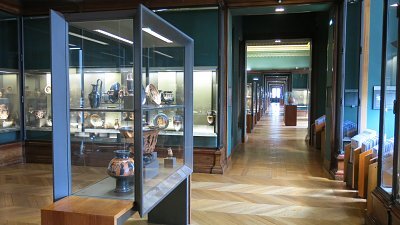
Greek Pottery in the Galerie Campana
Nine rooms of ancient Greek ceramics purchased by Napoleon III in 1861 from the disgraced Marquis Campana. Thousands of vases, cups, and kraters spanning a millennium, from geometric patterns to red-figure narrative scenes.
Currently closed.
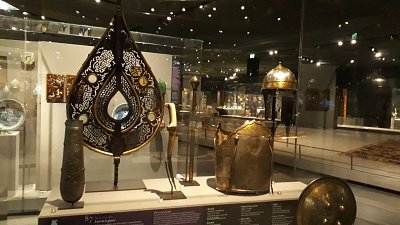
Islamic Art at the Louvre
Over 3,000 objects spanning the 7th to 19th centuries, housed beneath a shimmering glass-and-metal canopy designed by Bellini and Ricciotti in the Cour Visconti. From the Baptistère de Saint-Louis to Ottoman carpets.
Renovation in progress.
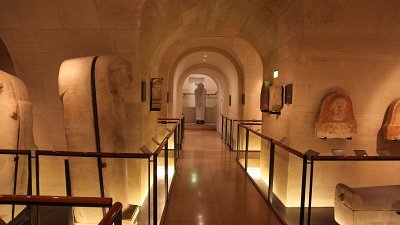
Ancient Iran, Arabia, and the Levant
Nine thousand years of Near Eastern history through objects from Susa, the Levantine coast, and the Arabian Peninsula. Glazed bricks from Darius's palace, funerary heads, and the Persian Archers.
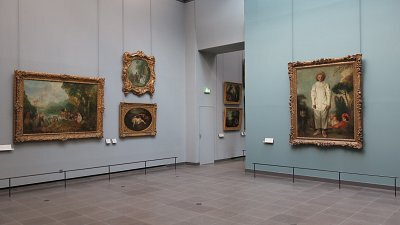
French Painting, 1600 to 1850
Two and a half centuries of French painting on the Sully Wing's second floor. From Georges de La Tour's candlelit scenes and Watteau's fêtes galantes to Chardin's still lifes and the grand canvases of the Revolutionary era.
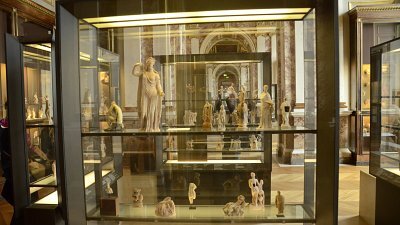
Roman Antiquities
Sculptures, sarcophagi, mosaics, and bronzes from the Roman Republic and Empire. The Borghese Gladiator, bought from Napoleon's brother-in-law in 1807, anchors a collection that traces Rome from its republican origins to late antiquity.
Renovation in progress.
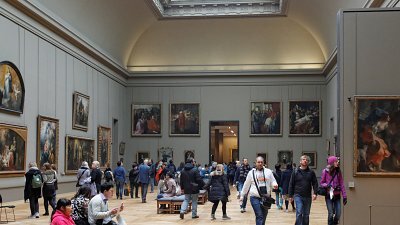
Spanish Painting at the Louvre
A compact but powerful collection of Spanish masters in the Denon Wing. El Greco, Ribera, Zurbarán, Murillo, and Goya, many acquired during the Napoleonic campaigns and from the Spanish gallery of Louis-Philippe.
Rooms 720 to 734 are currently closed.
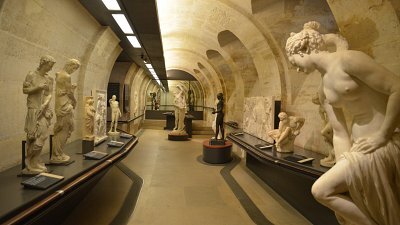
European Sculpture, 1500 to 1800
Italian and Northern European sculpture from the Renaissance through the Baroque on the Denon Wing's ground floor. Michelangelo's Slaves, Canova's Psyche Revived by Cupid's Kiss, and Bernini's bronzes.
Rooms 400-402 are closed. Michelangelo's ‘The Slaves’ are on display in the Michelangelo Rodin exhibition at the Hall Napoléon (15 April 2026 – 20 July 2026).
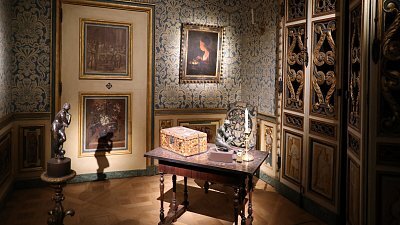
European Decorative Arts, 1800 to 1850
Furniture, silver, and porcelain from the Napoleonic Empire through the Restoration and July Monarchy. The Richelieu Wing rooms cover the shift from neoclassical austerity to the eclectic revival styles of the early 19th century.
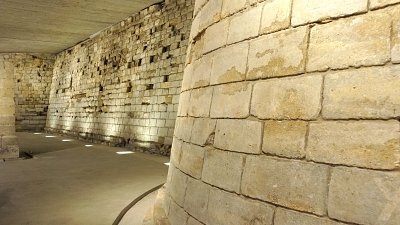
Medieval and Renaissance Decorative Arts
Ivories, enamels, tapestries, and goldwork from the fall of Rome through the Renaissance. Suger's Eagle Vase, the Maximian throne ivories, and Limoges enamels in the Richelieu Wing.
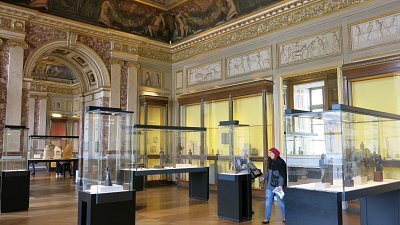
Egyptian Antiquities: The Chronological Galleries
Three thousand years of Egyptian civilization told in order, from the pre-dynastic period through the Ptolemaic era. Sarcophagi, stelae, statuary, and papyri on the Sully Wing's first floor.
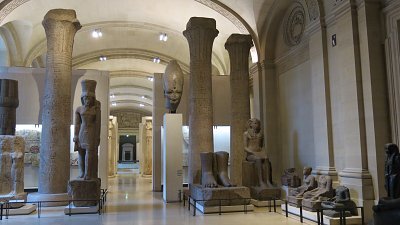
Egyptian Antiquities: Daily Life and Beliefs
Objects from daily life, religious practice, and funerary customs across three thousand years. The Seated Scribe, the Great Sphinx of Tanis, and mummy cases on the Sully Wing's ground floor.
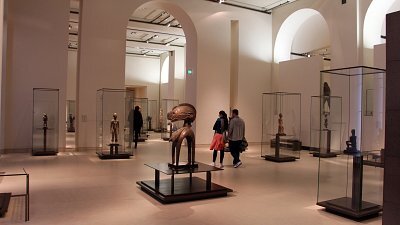
Arts of Africa, Asia, Oceania, and the Americas
A rotating selection of non-Western art on the Denon ground floor, created in partnership with the Musée du Quai Branly. Sculptures, masks, and textiles from four continents in a single gallery.
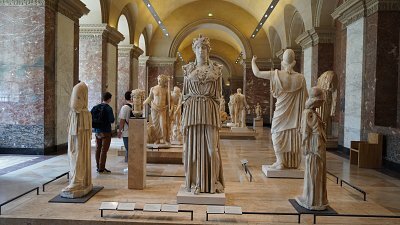
Greek Antiquities at the Louvre
From Cycladic figurines to Hellenistic bronzes, the Louvre's Greek collection spans three millennia. The Venus de Milo, the Winged Victory of Samothrace, and the Caryatid from the Erechtheion.
‘The Sleeping Hermaphrodite’ is not currently on display.
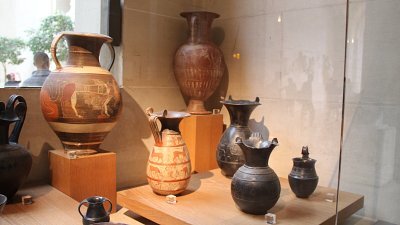
Etruscan and Italic Antiquities
Tomb paintings, terracotta sarcophagi, bronze mirrors, and gold jewelry from pre-Roman Italy. The Sarcophagus of the Spouses from Cerveteri anchors the Louvre's Etruscan collection.
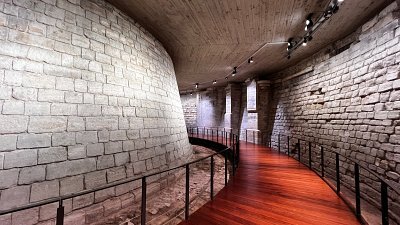
The Medieval Louvre
The foundations of Philippe Auguste's 12th-century fortress and Charles V's 14th-century keep, excavated beneath the museum. The original moat and dungeon walls sit below the modern galleries.
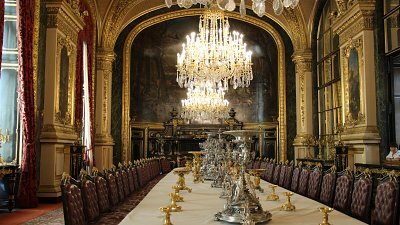
The Napoléon III Apartments
State rooms from the Second Empire, preserved intact since the 1860s. Crimson damask, crystal chandeliers, and gilt ceilings in the former Ministry of State on the Richelieu Wing's first floor.
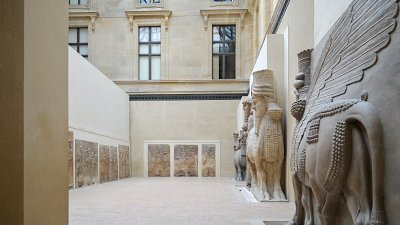
Mesopotamia and the Ancient Near East
Sumerian, Babylonian, and Assyrian antiquities in the Richelieu Wing. The Code of Hammurabi, the Winged Bulls of Khorsabad, and some of the oldest writing in the world.
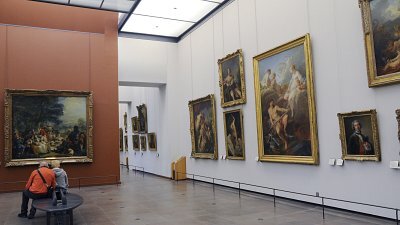
Early French Painting, 1350 to 1650
French painting from the late Middle Ages through the early Baroque. Jean Fouquet's portraits, the School of Fontainebleau's mannerism, and the beginning of French classicism in the Richelieu Wing.
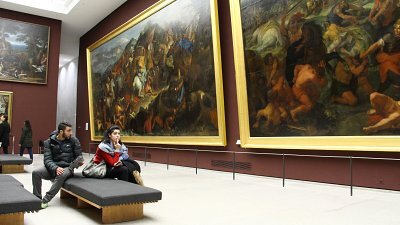
French Painting: The Grand Format
The Louvre's largest French paintings, including David's Coronation of Napoleon, Delacroix's Liberty Leading the People, and Géricault's Raft of the Medusa, all in the Denon Wing's vast galleries.
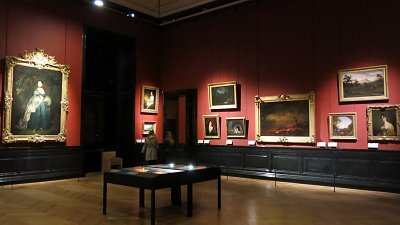
British and American Painting
A small gallery of British and American painting in the Denon Wing. Gainsborough, Reynolds, Constable, Turner, and a handful of American works in what is primarily a European collection.
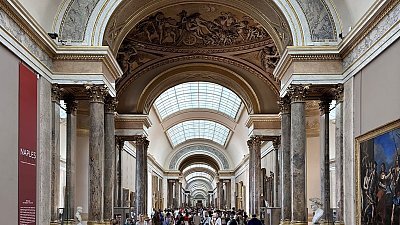
Italian Painting at the Louvre
The Mona Lisa, the Wedding at Cana, and over a thousand other Italian paintings spanning the 13th to 18th centuries. The Louvre's largest painting department, built on François I's friendship with Leonardo.
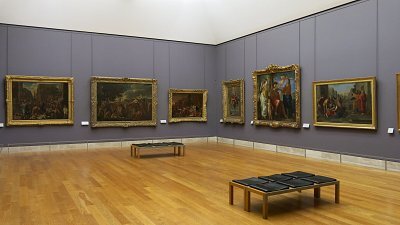
Flemish and Dutch Masters, 1400 to 1650
Van Eyck, Memling, Bosch, Bruegel, Rubens, and Rembrandt's early work in the Richelieu Wing. Northern European painting from the Flemish Primitives through the golden age of the Dutch Republic.
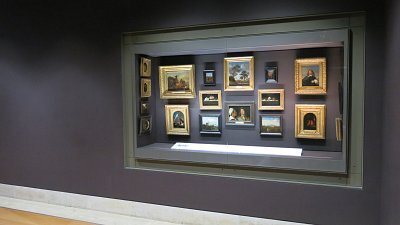
Dutch and Flemish Painting, 1600 to 1850
Rembrandt's Bathsheba, Vermeer's Lacemaker and Astronomer, and Rubens's Marie de' Medici cycle. Dutch and Flemish golden age painting through the 19th century in the Richelieu Wing.
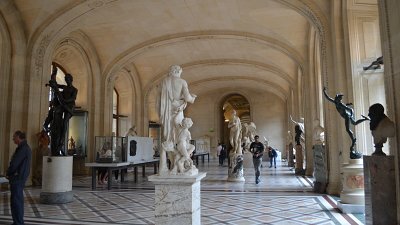
Medieval and Renaissance European Sculpture
Romanesque capitals, Gothic Madonnas, and Renaissance reliefs in the Denon Wing basement. From early Christian carved ivories through Donatello and the Italian quattrocento.
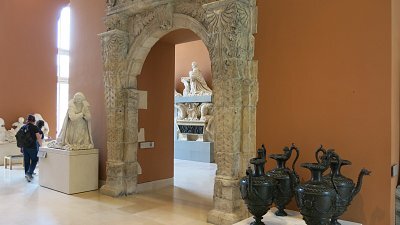
French Sculpture, 1700 to 1850
Houdon's portrait busts, Pigalle's Mercury, and Rude's monumental works under the glass roof of the Cour Marly. French sculpture from the Rococo through Romanticism.
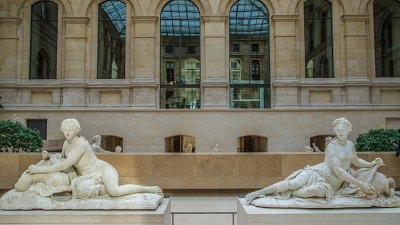
French Sculpture from the Middle Ages to the 1700s
A thousand years of French sculpture in the Cour Puget and surrounding rooms. From Romanesque church capitals to Puget's Baroque Milo of Croton, under a glass-roofed courtyard in the Richelieu Wing.