
European Decorative Arts, 1800 to 1850
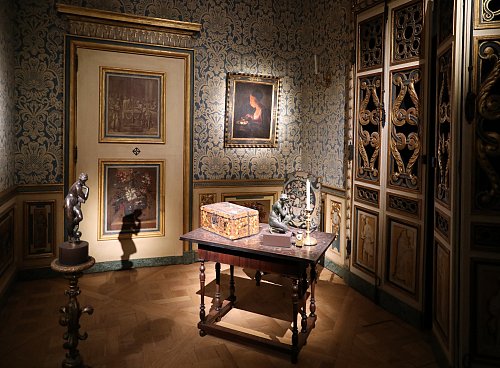 European Decorative Arts, 1800 to 1850 (Richelieu wing, level 1)
Empire furniture and what came after
These rooms in the Richelieu Wing pick up where the 18th-century decorative arts in the Sully Wing leave off. The French Revolution smashed the old regime's aesthetic along with its politics, and what replaced it was the Empire style: heavy, symmetrical, loaded with references to ancient Rome and Egypt. Napoleon wanted furniture that looked like it belonged in a Roman consul's house, and his designers obliged.
The key names here are Charles Percier and Pierre-François-Léonard Fontaine, the architects who defined the Empire look. They designed interiors for Napoleon's palaces at the Tuileries, Fontainebleau, and Compiègne, and the furniture in these rooms came largely from those residences. Mahogany replaced the lighter woods of the 18th century. Bronze mounts took on Egyptian motifs: sphinxes, winged disks, lotus flowers. The effect is imposing rather than delicate.
The craftsmen of the Empire
Jacob-Desmalter, the leading cabinetmaker of the period, produced most of the furniture for Napoleon's official residences. His workshop turned out desks, beds, and throne chairs following Percier and Fontaine's designs. A mahogany desk from the Tuileries is one of the standout pieces here: large, flat-topped, with gilt bronze caryatids at the corners. It's the kind of desk meant to make the person sitting behind it look important.
The Sèvres porcelain factory adapted to the new taste. Where 18th-century Sèvres had produced delicate flower-painted pieces, the Empire factory turned out vases with gold grounds, cameo portraits, and painted scenes from ancient history. Several large presentation vases are on display, the kind that Napoleon used as diplomatic gifts.
After Napoleon
The Restoration (1814-1830) and the July Monarchy (1830-1848) brought shifts in taste that the collection tracks. The strict neoclassicism of the Empire loosened. Gothic revival appeared. The Troubadour style, with its romantic medievalism, produced furniture and objects that look like stage props for a Walter Scott novel. The eclecticism is genuine: by the 1840s, French decorative arts were drawing on Renaissance, Baroque, Gothic, and Oriental sources simultaneously.
Charles X's reign saw a return to lighter-colored woods, particularly citrus and maple, often inlaid with dark wood or marquetry. The furniture from this period has an elegance that the heavier Empire pieces lack, though it never quite matches the inventiveness of the 18th century.
Silver, clocks, and small objects
The collection includes Parisian silver from the early 19th century, including services made for the imperial household. The goldsmith Martin-Guillaume Biennais supplied Napoleon's personal travelling case, fitted with everything from razors to candlesticks. There are clocks in bronze and marble, many with allegorical figures. A clock featuring Cupid and Psyche by Pierre-Philippe Thomire sits in one of the central cases, a piece that bridges the 18th-century taste for mythological decoration and the Empire preference for heavy bronze.
The rooms themselves are less visited than the 18th-century galleries, which gives you space to look at things properly. The shift from the Sully Wing's Ancien Régime refinement to the Richelieu Wing's post-revolutionary weight is itself worth tracking. Taste doesn't change in a vacuum, and these objects tell you something about what happens to luxury goods when the people who commissioned them get overthrown.