
The Gardens
A breath of fresh air in the heart of Paris
The significant historical narrative of the Tuileries Garden.
The year 1564 marked the beginning of a significant development. Queen Catherine de’ Medici, the widow of Henri II, longing for the Florentine palaces of her youth, commissioned the construction of a new palace and garden beyond the city walls of Paris. The name of this royal residence and its accompanying garden was derived from the tile factories (tuileries) that had occupied the selected site since the Middle Ages.
In 1664, the garden underwent a complete redesign by André Le Nôtre, the landscape gardener for Louis XIV. During this period, it was made accessible for the enjoyment of 'respectable folk.'
Following numerous alterations and a degree of privatization—particularly under the reigns of Napoleon I and his nephew Napoleon III—it was ultimately made accessible to the public in 1871.
In the same year, amidst the uprising of the Paris Commune, protestors set fire to the Tuileries palace as a demonstration against royal and imperial authority. Although the palace was never reconstructed, the garden endures to this day.
In 1990, a competition was initiated for the restoration of the Tuileries. The pair of landscape architects, Pascal Cribier and Louis Benech, emerged victorious, incorporating modern innovations into the historic garden.
The garden of André Le Nôtre
André Le Nôtre, known for creating the Gardens of Versailles, had a residence (no longer standing) located in the center of the Tuileries Garden where he was born, lived and died. After being trained by his father and grandfather who were both King's Gardeners, he organized the Tuileries Garden into three large sections (a layout still in place today).
The Grand Carré
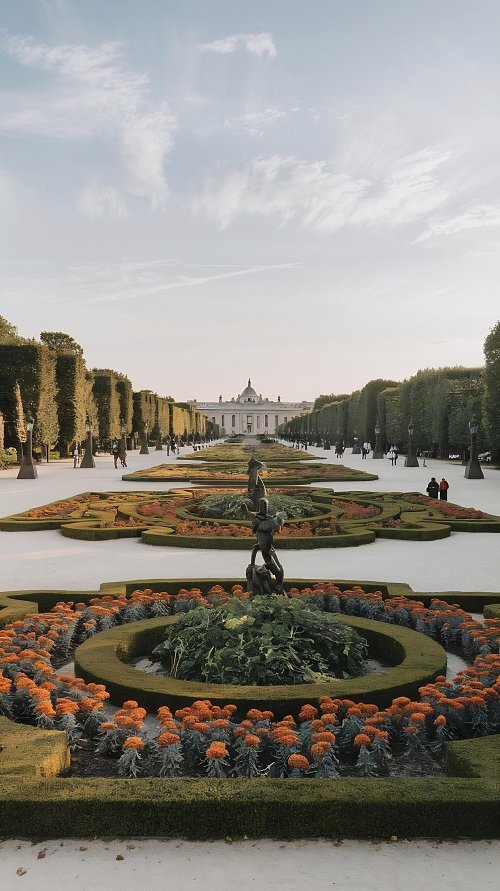
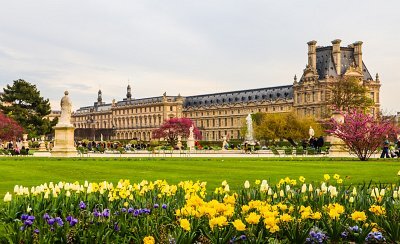
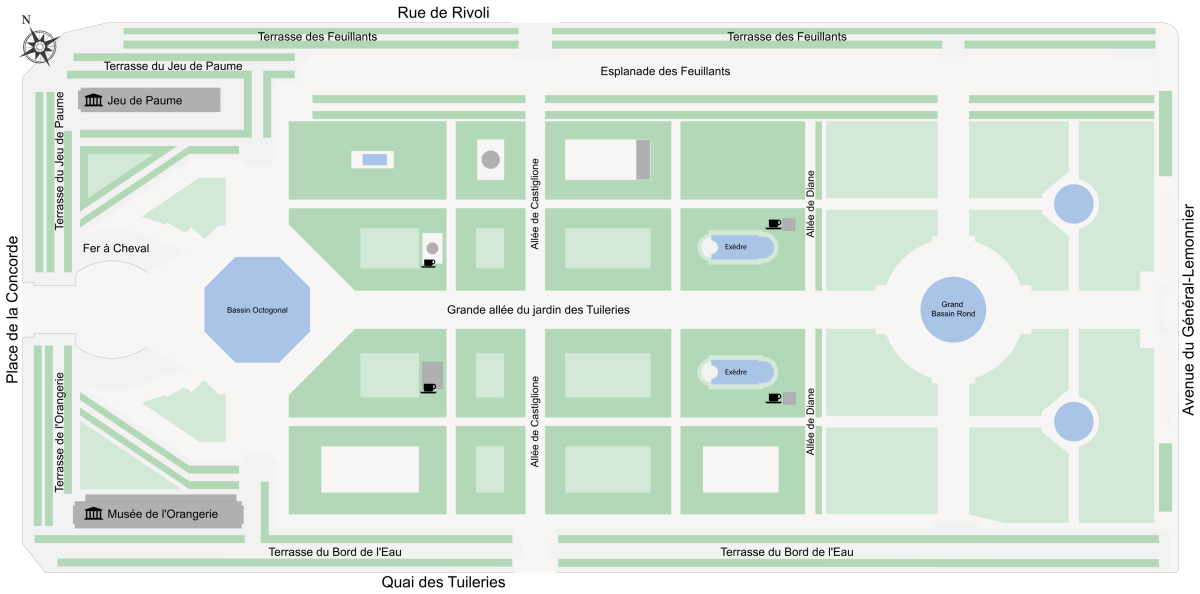
The Tuileries Estate's first garden, the Grand Carré, was designed to be viewed through the palace's windows as part of traditional French garden design. It was lined with water pools and had geometric beds that were enclosed by lower box hedges. Today, this section of the estate has become more of a formal flowering area, giving the gardener/landscaper at Tuileries more creative expression than previously allowed in their garden environments.
The Grand Couvert
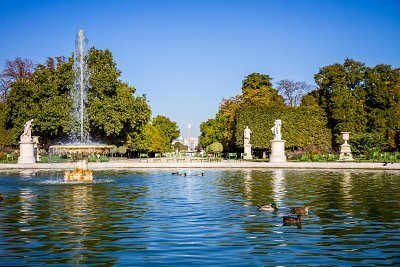
The Grand Couvert is another section of the garden located at the back of the garden. A region that was shaded by a forest when André Le Nôtre supervised the planting and care of eight groves of deciduous trees. All eight of the groves amount to symmetry but will each provide different experiences for the visitor to the area. This area has a large pathway called The Grande Allée that runs through it and the long symmetrical design of this pathway runs directly towards the Champs Elysées which was part of André Le Nôtre's design for the garden.
The horseshoe ramps and the terraces
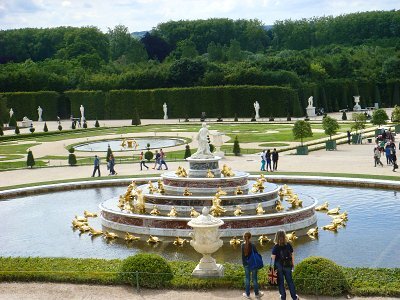
The area known as the Octogone is made up of an area surrounding the octagonal pond called Grand Bassin. There is also access to the terraces along the edge of the garden by using the ramps that are shaped like horseshoes. The terrace along the Seine River is built as a flood prevention barrier, and it has an exact duplicate parallel to it, the Terrasse des Feuillants, which runs along the Rue de Rivoli.
Map of Tuileries gardens
An outdoor museum.
The Tuileries Garden has contained vases and sculptures since it was first built in the 18th Century. Over the years, various governments have changed the collection by both adding and removing pieces as aesthetic preferences have changed. Several groves in the garden contain pieces that are on loan from museums of modern and contemporary art. Also, the sculptures of many famous sculptors from the 17th Century to Contemporary can be found throughout the garden, including Antoine Coysevox, Auguste Rodin, Jean Dubuffet, Giuseppe Penone, and Louise Bourgeois, among others.
Professional conservators take responsibility for all upkeep associated with maintaining the artworks in question. When required, the most fragile marble sculptures are moved to the Louvre for protection (specifically to the Cour Marly and Cour Puget, located in the Richelieu Wing), and their replicas are placed in the garden to replace them temporarily.