
Food and wine experiences around the Louvre
Food and wine experiences around the Louvre
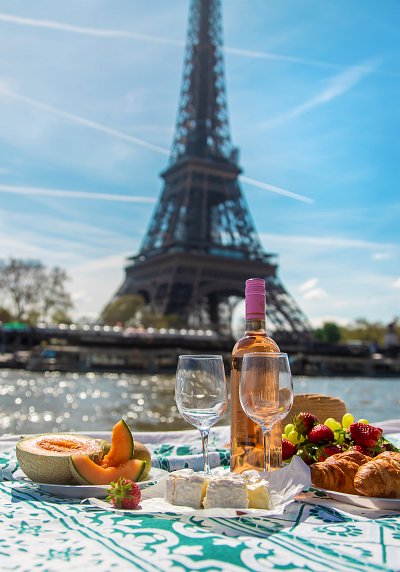
Eating in Paris is not a side activity
In most cities, food is something you fit around the sightseeing. In Paris, food is the sightseeing. The French relationship with meals — the pacing, the courses, the insistence that lunch is not something you rush — is as much a part of the culture as the art hanging on the walls at the Louvre. If you are spending a day at the museum and you do not make time for a proper meal, you are skipping one of the best parts of being in Paris.
The area around the Louvre happens to sit at the intersection of some of the city's oldest food traditions. The 1st arrondissement has been feeding Parisians since the days of Les Halles, the central market that supplied the city for over 800 years before it was demolished in 1971. The market is gone, but the food culture it created is still here: bakeries that have been making bread the same way for decades, wine bars tucked into side streets, bistros that serve the kind of steak-frites that makes you wonder why anyone tries to improve on it.
What to eat near the museum
Inside the Louvre itself, your options range from quick counters under the Pyramid to sit-down restaurants in the Richelieu and Denon wings. Café Mollien, on the first floor of the Denon wing, has a terrace overlooking the Cour Napoleon — not a bad place to sit with a glass of wine after a few hours in the galleries. Outside, the Tuileries Garden has seasonal cafés that are pleasant in warm weather, and the Rue de Rivoli and Rue Saint-Honoré are lined with everything from patisseries to full-service brasseries.
If you walk ten minutes south to the Left Bank, the options multiply. The Rue de Buci and the streets around Saint-Germain-des-Prés have some of the best market stalls, cheese shops, and wine merchants in the city. Cross the Pont Neuf to the Île de la Cité or the Île Saint-Louis and you hit Berthillon, which has been making ice cream since 1954 and still draws a queue in every season.
Wine tastings
France produces more wine than any other country, and Paris is where a lot of it ends up. Wine tastings aimed at visitors typically run 90 minutes to two hours and introduce you to the major French regions: Bordeaux, Burgundy, the Rhône, the Loire, Champagne. A good tasting does not just pour wine and list tasting notes. It explains why a Burgundy Pinot Noir tastes different from an Alsatian one, what terroir actually means in practice, and how to read a French wine label without pretending you understand it.
Several tasting venues operate within walking distance of the Louvre. Some are run by sommeliers in dedicated cellars. Others take place in wine bars where you can stay for a glass afterwards. The sessions that include cheese or charcuterie pairings tend to be the most popular, for obvious reasons — learning how a Comté changes the flavour of a Jura wine is the kind of thing you remember long after you forget which room the Mona Lisa was in.
Cooking classes
If tasting is passive, cooking classes are the opposite. Paris has a well-established scene for hands-on culinary workshops, and many of them are designed for visitors with no professional kitchen experience. A typical session runs two to three hours: you shop for ingredients at a local market, learn a few techniques, prepare a meal, and then eat what you made. Courses cover everything from croissants and macarons to full French dinners with sauces, proteins, and dessert.
For visitors who want to bring something home beyond photos and souvenirs, knowing how to make a proper béchamel or a tarte Tatin is a surprisingly lasting souvenir. And unlike a painting from the museum shop, it is one you can actually use.
Food tours on foot
Walking food tours combine the eating with the exploring. A guide takes you through a neighbourhood — often the Marais, Saint-Germain, or Montmartre — stopping at bakeries, fromageries, chocolate shops, and wine merchants along the way. You sample as you go: a slice of aged Beaufort here, a fresh croissant there, a square of single-origin chocolate, a cup of bouillon from a century-old shop. By the end you have eaten the equivalent of a full meal, walked off most of it, and seen a part of Paris that the typical tourist circuit misses.
These tours work especially well as a morning activity before visiting the Louvre, or as an afternoon break after spending the morning in the galleries. They are also a good way to learn what to look for if you plan to eat on your own for the rest of your trip — how to spot a good boulangerie, what to order at a wine bar, which cheeses are in season.
Finding the right experience
Browse the food and wine tours below. Some are pure tastings, some are cooking workshops, some are guided walks with stops. Check what is included, how long each one runs, and whether the timing fits around your museum plans.